Beyond Title Deeds: Cultivating Successful Emerging Farmers
Providing land access to emerging farmers is insufficient for sustainable livelihoods without complementary support. Research shows that true agricultural success requires agro-ecological suitability, capital access, flexible farming models and secure tenure. Agroecology bridges these gaps by lowering financial barriers and building resilient food systems.
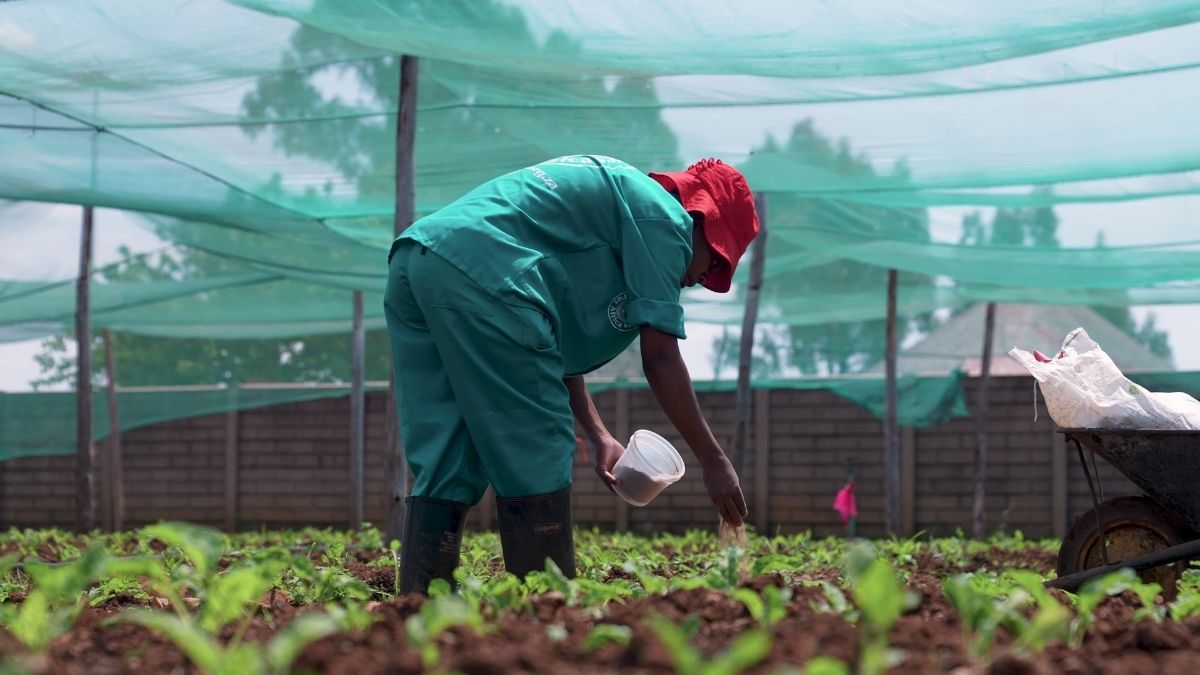
Recently, it was announced that approximately 2.5 million hectares of state-owned land in South Africa will be released to emerging black farmers. This represents a monumental step toward agrarian transformation and a vital opportunity to expand the country’s productive agricultural base. Providing land access and title deeds is an essential catalyst for rural development, poverty alleviation and addressing historical inequalities.
However, as the global conversation around agriculture shifts toward long-term sustainability, a critical truth has emerged: land access is just the beginning.
While providing a title deed is a necessary precondition for agrarian transformation, decades of research across sub-Saharan Africa reveal that land alone is rarely sufficient to create sustainable livelihoods for emerging farmers. To truly empower a new generation of agriculturalists, we must look beyond the soil and examine the holistic ecosystem required for success. By understanding the data and embracing sustainable paradigms like agroecology, we can ensure that emerging farmers do not merely survive but thrive.
The Research Reality: Why Land Alone Falls Short
A comprehensive review of 25 studies analysing land provision across seven sub-Saharan African countries provides a sobering but highly instructive reality check. The research consistently demonstrates that simply handing over land to emerging farmers, especially those with limited prior agricultural experience, does not automatically translate into commercial viability or food security.
In fact, the margin between success and failure is rarely dictated by a farmer's prior agricultural experience alone. Instead, success is fundamentally shaped by the presence or absence of four critical complementary conditions: agro-ecological suitability, access to capital, farming-model flexibility and tenure security.
When land is distributed in marginal, arid environments without the necessary infrastructure or when farmers are expected to immediately adopt capital-intensive commercial models, the results are often stagnant or negative. Conversely, where emerging farmers receive land in favourable climates, are granted secure tenure and are allowed to adapt their farming models to their available resources, the outcomes are overwhelmingly positive. Some studies show consumption gains of up to 50% and living standards rising dramatically within just three to four years.
To build a resilient agricultural sector, stakeholders must move away from the assumption that the physical transfer of land is the final destination. Instead, we must build a comprehensive support architecture around these four pillars.
The Pitfall of the "One-Size-Fits-All" Commercial Model
One of the most striking findings from the research is the danger of "farming model mismatch". Historically, agricultural development has often imposed capital-intensive, large-scale commercial farming (LSCF) models on emerging farmers. The assumption has been that new farmers must immediately emulate established, highly mechanised agribusinesses to be considered successful.
The data shows this uncritical application of the LSCF model often produces unworkable project designs that are entirely mismatched to the circumstances of the rural poor. For instance, expecting a newly resettled farmer to immediately sustain large-scale export fruit production, which requires massive upfront capital, expensive chemical inputs and complex logistics, sets them up for failure.
Instead, the research highlights that when beneficiaries have the latitude to adapt land uses to their specific skills, resources and local market demands, outcomes improve significantly. Smaller-scale, diversified and community-oriented farming models often generate far more consistent income and food security for emerging farmers than forced attempts at large-scale monoculture.
Capital Access and the Power of Tenure Security
Even the most passionate and hardworking emerging farmer cannot succeed without capital. The research identifies access to capital as the primary differentiator between those who remain trapped in subsistence farming and those who transition into emergent or commercial production.
Farming is inherently capital-intensive. It requires seeds, tools, irrigation infrastructure and the financial runway to survive the months between planting and harvest. Without access to patient, affordable capital such as blended finance schemes, micro-grants or low-interest agricultural loans, many emerging farmers find themselves with land they simply cannot afford to utilise.
This is where tenure security becomes paramount. The form of land provision substantially shapes livelihood outcomes. When farmers hold secure title deeds or long-term, legally binding leases, they gain the ability to pledge their farms as collateral to secure credit.
But tenure security does more than just unlock financial capital; it unlocks ecological capital. A farmer with a short-term or insecure lease is unlikely to invest in long-term soil health, plant slow-growing fruit trees or install permanent water-saving infrastructure. Secure land ownership gives emerging farmers the confidence to invest in the future, knowing that they and their children will reap the benefits of their labour.
The Unique Angle: Agroecology as the Blueprint for Success
If the research tells us that capital constraints and inflexible, input-heavy commercial models are the primary barriers to emerging farmer success, then how do we forge a new path? The answer lies in agroecology.
For organisations like Food & Trees for Africa, agroecology represents the ultimate bridge between land access and sustainable livelihood generation. Agroecology is an integrated approach that applies ecological and social concepts to the design and management of food and agricultural systems. It is not just about farming without chemicals; it is about building resilient ecosystems that work in harmony with nature.
From a practical standpoint, agroecology directly solves several of the barriers identified in the research:
1. Lowering the Capital Barrier: Conventional commercial farming requires continuous, expensive inputs such as synthetic fertilisers, pesticides and hybrid seeds. Agroecology focuses on natural soil fertility, composting, intercropping and saving indigenous seeds. By drastically reducing the need for costly external inputs, agroecology lowers the financial barrier to entry, allowing emerging farmers to operate profitably even with limited initial capital.
2. Enhancing Agro-Ecological Suitability: The research noted that land provision in marginal agro-ecological zones is substantially less likely to generate positive outcomes. However, much of the available land in Southern Africa faces challenges like poor soil quality or water scarcity, issues exacerbated by climate change. Agroecological practices such as agroforestry (integrating trees into crop and animal farming) improve soil water retention, provide windbreaks and rebuild degraded topsoil. Over time, these practices actually improve the agro-ecological suitability of the land, turning marginal spaces into productive, resilient havens.
3. Diversification and Risk Mitigation: Unlike monoculture, which leaves farmers vulnerable to a single pest outbreak or market price crash, agroecology promotes high biodiversity. An emerging farmer practising agroecology might grow vegetables, keep a small herd of livestock and harvest fruit or nuts from trees. This diversified model ensures multiple income streams and robust household food security, buffering the farmer against economic and environmental shocks.
Cultivating the Future
The release of state-owned land to emerging farmers is a vital milestone in addressing historical injustices and expanding our agricultural horizons. But we must be clear-eyed about the realities of agricultural development.
The research is unequivocal: land redistribution is necessary but it is not a magic wand. To translate hectares into harvests and title deeds into thriving livelihoods, we must rethink our support systems.
We need to foster collaborative networks where established farmers, agribusinesses, NGOs and the government provide comprehensive mentorship, technical training and market access. We need to expand blended finance instruments that offer patient capital tailored to the unique rhythms of agricultural growth.
Most importantly, we need to redefine what a "successful" farm looks like. By moving away from rigid, capital-heavy models and embracing the flexible, resource-efficient and regenerative principles of agroecology, we can empower a new generation of farmers. In doing so, we will not only feed the nation and create vital rural jobs but we will also restore our soils, protect our ecosystems and ensure that our agricultural sector is resilient enough to weather the challenges of tomorrow.
The land is waiting. Now, we must provide the roots for it to flourish.

Written By
Research Team
Comprising experts from diverse departments, the Food & Trees for Africa (FTFA) research team drives informed strategies to advance environmental sustainability, climate resilience and food security.
Support Independent Analysis
Did you find this insight valuable? Your support allows us to continue producing rigorous, open-access research for ESG and sustainability professionals worldwide.
Make a ContributionFact Sheet
- Est. Reading Time7 min
- Author Auth.Verified
- Last ReviewedOctober 12, 2026
Research & Trends
Get early access to our latest insights and analysis.
Join over 10,000 professionals. We respect your inbox and you can unsubscribe at any time.
Recommended For You

Regulation, Risk and Governance
South Africa's Carbon Tax Phase 2: New Financial Reality for Business

Regulation, Risk and Governance
The Mathematics of the S in ESG: A New Framework for NGO Collaboration

Technology and Systems Innovation
Aligned by Design: Why Food & Trees for Africa Chose Signal Messenger

Sustainable Finance and Reporting