The Illusion of Abundance: Unmasking South Africa’s Hidden Hunger
Despite producing national food surpluses, South Africa faces a crisis of hidden hunger and malnutrition. Research shows that commercial food systems and inadequate social grants force low-income households to rely on cheap, highly processed foods. Adopting agroecology and indigenous crops offers a sustainable solution to restore community nutrition and food sovereignty.
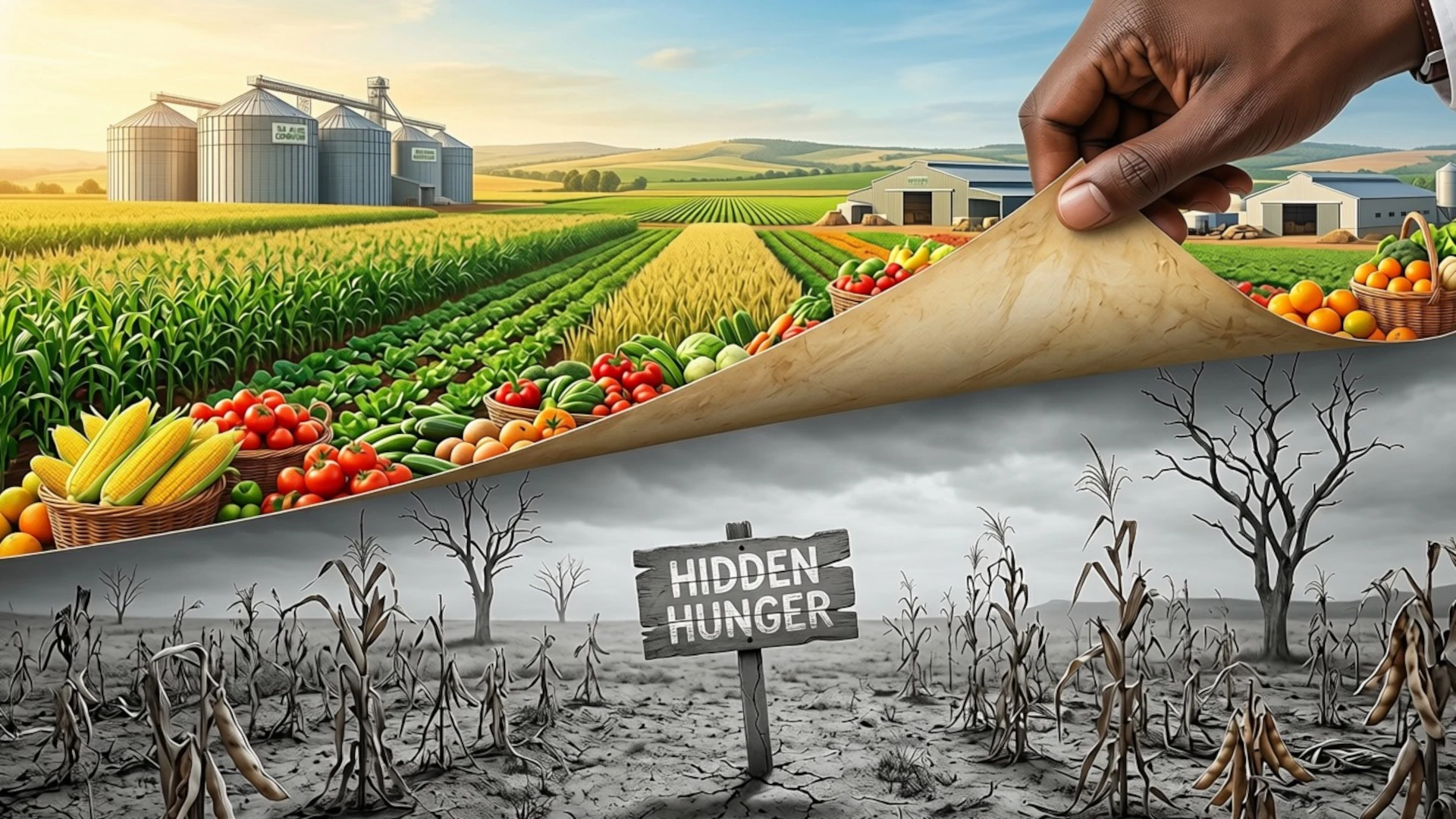
As the globe marks World Food Day, conversations inevitably centre on agricultural yields, food production and national supply. By these traditional metrics, South Africa is a resounding success. The nation consistently produces a surplus of food, averaging a massive 112% self-sufficiency in staple crops like maize over the last decade.
Yet, behind this illusion of abundance lies a deeply entrenched crisis.
The problem in South Africa is no longer just a lack of food. It is a profound lack of nutrition. A comprehensive review of decades of research reveals a chilling reality: national food surpluses are completely failing to address household food insecurity. Millions of citizens are surrounded by food they cannot afford, forcing a reliance on diets that satisfy hunger but starve the body of vital nutrients.
The Double Burden of Malnutrition
This systemic failure has given rise to one of the most troubling health anomalies of our time, known in public health literature as the "double burden" of malnutrition. In South Africa, severe undernutrition exists side by side with rising rates of overnutrition.
Research indicates that child stunting has persistently hovered between 21% and 29% for nearly three decades. Simultaneously, over half of the adult population is classified as overweight or obese. It is incredibly common to find stunted children and obese adults living in the exact same household.
This is not a contradiction. It is the direct result of a commercial food environment that floods low-income communities with cheap, energy-dense and highly processed foods.
The Price of Nutrition and the Grant Ceiling
To understand how this double burden happens, we must look at the economics of the South African dinner plate. While the country boasts an extensive social protection network, it is mathematically impossible for the most vulnerable citizens to eat well. The Child Support Grant is currently set at 33% below the national food poverty line.
When state grants fail to keep pace with retail food inflation, households are forced to make impossible choices. Studies show that a nutritious, healthy diet costs nearly 70% more than a diet built on refined starches, saturated fats and sugars. Consequently, the poorest households spend their limited cash on bulk, non-perishable staples just to ensure their families have something in their stomachs.
The commercial food sector capitalises on this economic vulnerability. Large food corporations expand into rural and peri-urban areas with heavily marketed, nutritionally void products, knowing that struggling households will always prioritise cheap calories over expensive vitamins.
The Geographic Trap
This affordability crisis is compounded by severe distribution and infrastructure failures. There is a profound spatial inequality in how fresh food reaches citizens. Large commercial supermarkets with well-stocked fresh produce aisles are largely absent outside major urban centres. Instead, the rural and peri-urban poor rely heavily on informal markets, street vendors and spaza shops.
While these informal networks are vital community lifelines, they face massive structural barriers. Poor road infrastructure, geographic isolation and a lack of reliable cold-chain storage mean that fresh, perishable produce frequently rots before it can be sold. To avoid financial ruin, informal traders naturally stock non-perishable, highly processed foods with long shelf lives. This creates a geographic trap where fresh fruits and vegetables are not just unaffordable but physically unavailable in the areas that need them most.
The Rise of Hidden Hunger
The ultimate result of these overlapping failures is a phenomenon known as "hidden hunger". A household might consume enough daily calories to survive, but the individuals remain chronically deficient in essential micronutrients like vitamin A, iron and zinc.
Even mandatory national food security fortification programmes have failed to fully bridge this gap. You cannot simply medicate away a broken food environment. When formal retail networks bypass the rural poor or only offer highly processed goods, communities are systematically denied the dietary diversity required for healthy physical and cognitive development.
Reclaiming Our Roots: The Agroecology Solution
Breaking this cycle requires a radical departure from the commercial food paradigm. We cannot rely on supermarkets to fix a nutritional crisis they helped create. The solution lies in returning the power of food production directly to communities through sustainable agriculture.
One of the most untapped resources in this fight is the cultivation of indigenous and traditional food crops. Historically, crops like amaranth, sorghum, cowpeas and traditional leafy greens formed the backbone of African diets. They are highly nutritious, incredibly climate-resilient and perfectly suited to local soils. However, decades of colonial and commercial agricultural policies have stigmatised these vital crops as "weeds" or "poor people's food".
Organisations like Food & Trees for Africa (FTFA) are working urgently to dismantle this stigma. Through grassroots agroecology programmes, FTFA equips schools and communities with the skills to design biodiverse permaculture gardens. By cultivating a wide variety of indigenous crops, fruits and vegetables, communities can completely bypass the exorbitant costs of the commercial health-food aisle.
Agroecology does not just fill stomachs. It restores dietary diversity, rehabilitates degraded soil and builds localised circular economies that keep wealth within the community. When a school harvests its own nutrient-dense vegetables for a feeding scheme, it breaks the chains of hidden hunger at the source.
Nutrition Security for the Future
This World Food Day, we must expand our vision. It is no longer enough to celebrate national crop surpluses, laud our export markets or measure success by sheer caloric output. We must demand a food system that nourishes rather than exploits.
By investing in community-led agroecology and reclaiming our indigenous food heritage, we can finally cure the hidden hunger that plagues our nation. True food sovereignty means that every child has the right not just to a full stomach but to a healthy, vibrant future.
Sources & References
- 1.Devereux, S. and Ikebuaku, K. (2026). Explaining the Normalisation of Black Hunger in South Africa: Not Enough Food, or Not Enough Empathy? Ecology of Food and Nutrition.
- 2.Chakona, G. and Shackleton, C. (2018). Household Food Insecurity along an Agro-Ecological Gradient Influences Children’s Nutritional Status in South Africa. Frontiers in Nutrition.
- 3.Boatemaa, S., Drimie, S. and Pereira, L. (2018). Addressing food and nutrition security in South Africa: A review of policy responses since 2002. African Journal of Agricultural and Resource Economics.
- 4.Cloete, P. and Idsardi, E. (2013). Consumption of Indigenous and Traditional Food Crops: Perceptions and Realities from South Africa. Agroecology and Sustainable Food Systems.
Support Independent Analysis
Did you find this insight valuable? Your support allows us to continue producing rigorous, open-access research for ESG and sustainability professionals worldwide.
Make a ContributionFact Sheet
- Est. Reading Time5 min
- Author Auth.Verified
- Last ReviewedOctober 16, 2026
Research & Trends
Get early access to our latest insights and analysis.
Join our community of ESG and sustainability professionals. We respect your inbox and you can unsubscribe at any time.
Recommended For You
Agri-enterprise
Beyond Title Deeds: Cultivating Successful Emerging Farmers
Sustainable Food Production
Biological Inflation: Why Food Security Without Nutrition Is a Mirage

Regulation, Risk and Governance
The Mathematics of the S in ESG: A New Framework for NGO Collaboration

Technology and Systems Innovation
Aligned by Design: Why Food & Trees for Africa Chose Signal Messenger

Regulation, Risk and Governance