How the Maize Monoculture Trap Broke Southern African Nutrition
Colonial policies and post-independence subsidies turned white maize into a regional monoculture occupying up to 75% of Southern Africa's arable land. While maize provides cheap calories, diets dominated by refined maize meal lack essential amino acids, zinc and iron, driving childhood stunting that only agroecological crop diversification can solve.
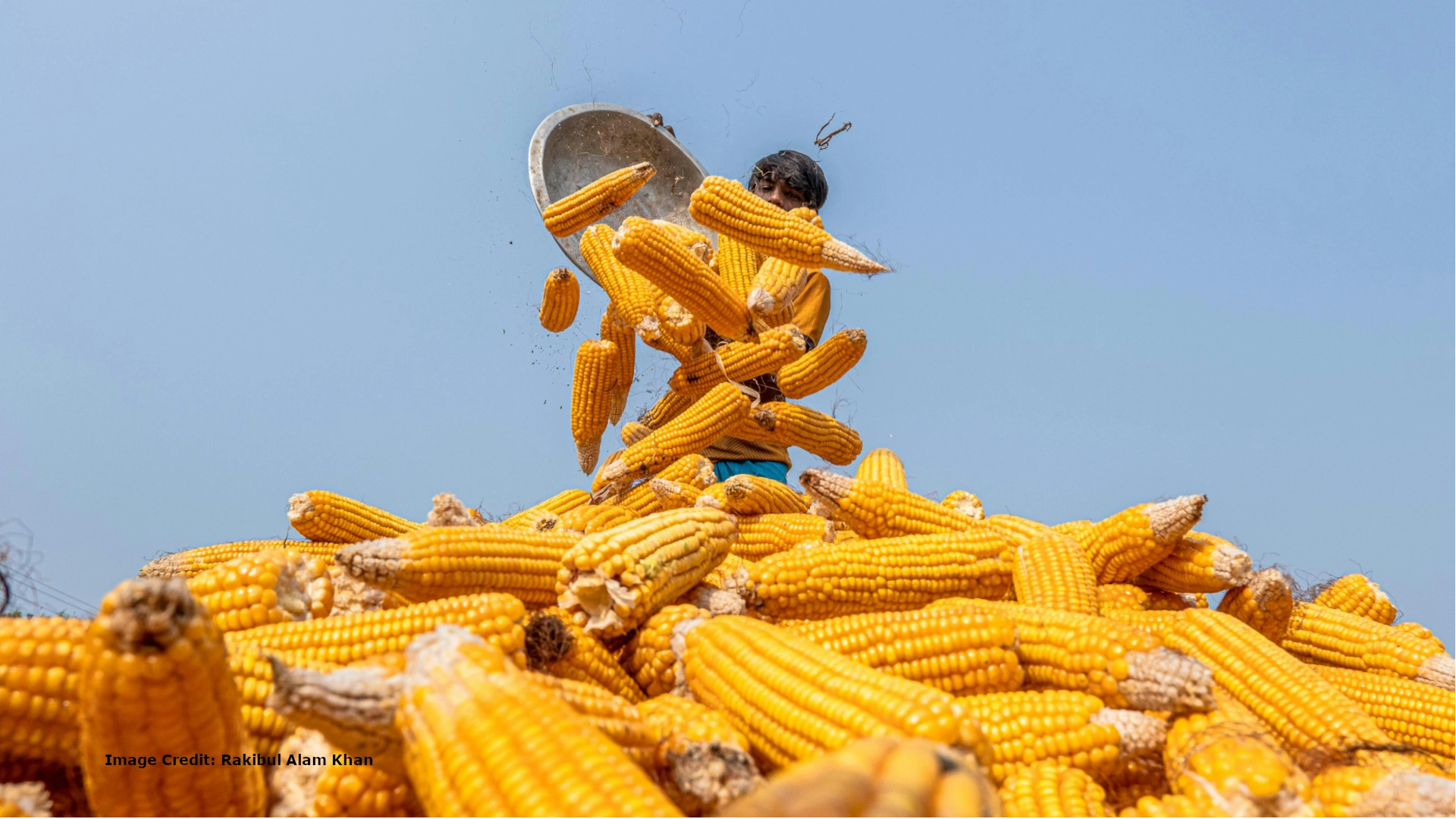
For decades, governments from Lusaka and Lilongwe to Harare and Pretoria have measured national food security by a single, deceptively simple metric: how many metric tons of white maize sit in the national silos. When the rains are kind and the grain depots overflow, politicians declare a bumper harvest. On paper, the region is fed.
Yet walk into a rural clinic or a peri-urban school across Southern Africa during a year of maize surplus, and a disturbing paradox stares back at you. Nearly a third of children under five remain chronically stunted, their physical growth and cognitive potential permanently constrained by malnutrition.
How can a region boast overflowing grain silos while its children’s cells are starving? The answer lies in a century-old agricultural and historical trap. By confusing caloric volume with human nourishment, Southern Africa allowed a single crop from the Americas to monopolise its soils, displace its indigenous food heritage and hollow out its diet.
From Colonial Ration to Cultural Monoculture
Today, white maize is woven so deeply into the cultural fabric of Southern Africa, whether served as pap, sadza, nshima or nsima, that it is easy to forget it is a historical newcomer. For thousands of years, African farming systems thrived on a biodiverse tapestry of indigenous grains and legumes, including sorghum, pearl millet, finger millet, Bambara groundnuts and cowpeas. These ancient crops were naturally adapted to erratic African rainfall and packed with complementary proteins and trace minerals.
The shift to maize dominance was not an accident of nature; it was engineered by policy. During the colonial and apartheid eras, mining houses and industrialising cities required a cheap, easily stored, high-calorie ration to feed migrant labourers. Colonial agricultural boards established guaranteed markets and milling monopolies for white maize while actively neglecting indigenous small grains.
After independence, governments across the region doubled down on this colonial blueprint. Through massive state programmes such as the Farm Input Subsidy Programme (FISP) in Zambia and Malawi, states heavily subsidised synthetic fertilisers and hybrid maize seeds while using national food reserve agencies to guarantee maize purchases.
A synthesis of 25 empirical studies across Southern Africa reveals the staggering scale of this policy lock-in. In major farming districts of Zambia and Zimbabwe, maize now occupies between 73% and 75% of all cultivated arable land and accounts for nearly 90% of household crop production. Regionally, Southern Africans consume an average of 71 kilograms of maize per person annually, more than four times the global average of 17 kilograms, relying on this single grain for 50% to 60% of their daily calories.
The Biology of a Starving Cell
To understand why a maize-dominant diet breaks human nutrition, we must look inside the grain itself. When a child eats a bowl of stiff white maize porridge, their stomach stretches and signals fullness to the brain. Caloric hunger is silenced. At the cellular level, however, a quiet crisis of "hidden hunger" unfolds.
First, maize protein is biologically incomplete. It is severely deficient in two essential amino acids, lysine and tryptophan, which the human body cannot synthesise on its own and requires for tissue repair, hormone production and brain development.
Second, maize-heavy diets carry a high prevalence of micronutrient inadequacy, particularly for zinc, calcium, selenium and vitamin B12. Worse still, unfermented maize contains high levels of phytate, an anti-nutrient compound that binds to iron and zinc in the human digestive tract and blocks their absorption.
Modern milling habits make this nutritional deficit catastrophic. Across Southern Africa, cultural preferences formed during the industrial era favour bright, super-refined white maize meal over whole-grain flour. A 2025 milling experiment in rural Malawi led by Thokozani Ngoma demonstrated that conventional abrasive dehulling removes the nutrient-rich germ and bran, stripping away 61.7% of the zinc and 47.7% of the iron before the flour ever reaches the cooking pot. Switching to whole-grain maize flour alone could raise a woman’s daily zinc intake from 33% to 87% of recommended levels, yet social stigma frequently labels unrefined flour and traditional grains as "poor people's food".
The Smallholder Debt and Drought Trap
Ironically, the maize monoculture frequently fails even to deliver the basic caloric security it promises. Because hybrid maize is an input-hungry crop, it traps smallholder farmers in a precarious economic cycle.
In a nearly 40-year historical analysis of Choma District in Zambia, Kelvin Mubanga and Willie Ferguson found that despite farmers dedicating 73.4% of their land to maize, households only retained enough grain to meet their minimum family requirements in nine out of 38 years. Forced to sell roughly half of their harvest immediately at low post-harvest prices to repay input costs, pay school fees and buy basic necessities, families were repeatedly left with empty granaries before the next rain. Earlier research in Zimbabwe found an identical trap, where 48% of communal farmers who took recommended fertiliser packages on credit could not retain enough maize to feed their families after settling their input debt.
Climate change is turning this economic vulnerability into an ecological emergency. Bio-economic modelling across Southern Africa by Sika Gbegbelegbe and colleagues warns that maize is the regional staple most sensitive to drought. Because maize requires precise rainfall during its short tasselling and silking window, a single El Niño dry spell can wipe out a harvest, pushing regional hunger rates up by 10% or more within a single year.
Breaking the Monoculture Through Agroecology
Escaping the maize trap does not mean abandoning a beloved cultural staple. Rather, it requires surrounding maize with the biodiversity that once sustained the continent.
On-farm research proves that monoculture is agronomically inefficient compared to agroecology. In a nine-season trial across eastern Zambia, Blessing Mhlanga and colleagues compared conventional monocropped maize against conservation agriculture systems that intercropped or rotated maize with grain legumes. The diversified intercropped systems produced 25% more total caloric energy per hectare and nearly doubled the total protein yield (jumping from 263 to 517 kilograms of protein per hectare annually), while stabilising yields during erratic weather.
Furthermore, addressing the social and gender dynamics of the farm is essential. Across the region, men traditionally control cash-crop maize fields while women manage household nutrition and secondary plots of groundnuts, cowpeas and indigenous vegetables. A 12-year participatory agroecology programme in northern Malawi led by Rachel Bezner Kerr combined legume intercropping with nutrition security and gender-relations workshops. By empowering women in household agriculture, the initiative boosted legume adoption from 15% to over 70% of farmers and delivered measurable improvements in children’s growth scores.
For organisations like Food & Trees for Africa (FTFA), this research validates a foundational principle: national food security cannot be measured in metric tonnes of a single starch. Through community permaculture projects, indigenous crop revival and agroecological training, FTFA helps schools and smallholder farmers replace sterile monocultures with vibrant, multi-crop ecosystems. By putting legumes, fruit trees and nutrient-dense indigenous greens back beside the maize stalk, we can ensure that Southern Africa’s harvests nourish every cell, not just fill the stomach.

Written By
Research Team
Comprising experts from diverse departments, the Food & Trees for Africa (FTFA) research team drives informed strategies to advance environmental sustainability, climate resilience and food security.
Sources & References
- 1.Mhlanga, B., Mwila, M. and Thierfelder, C. (2021). Improved nutrition and resilience will make conservation agriculture more attractive for Zambian smallholder farmers. Renewable Agriculture and Food Systems, 36(5), 459-470.
- 2.Mubanga, K. H. and Ferguson, W. (2017). Threats to food sufficiency among smallholder farmers in Choma, Zambia. Food Security, 9(4), 745-758.
- 3.Ngoma, T. N., Taleon, V., Mvumi, B., et al. (2025). Whole maize flour could enhance food and nutrition security in Malawi. Discover Food, 5, 11.
- 4.Bezner Kerr, R., Berti, P. R. and Shumba, L. (2011/2014). Effects of a participatory agriculture and nutrition education project on child growth in northern Malawi. Public Health Nutrition, 14(8), 1466-1472.
Support Independent Analysis
Did you find this insight valuable? Your support allows us to continue producing rigorous, open-access research for ESG and sustainability professionals worldwide.
Make a ContributionFact Sheet
- Est. Reading Time6 min
- Author Auth.Verified
- Last ReviewedOctober 16, 2026
Research & Trends
Get early access to our latest insights and analysis.
Join our community of ESG and sustainability professionals. We respect your inbox and you can unsubscribe at any time.
Recommended For You
Social Impact and Communities
The Illusion of Abundance: Unmasking South Africa’s Hidden Hunger
Sustainable Food Production
Biological Inflation: Why Food Security Without Nutrition Is a Mirage
Agri-enterprise
Beyond Title Deeds: Cultivating Successful Emerging Farmers

Regulation, Risk and Governance
The Mathematics of the S in ESG: A New Framework for NGO Collaboration

Technology and Systems Innovation