Is Johannesburg Really the World’s Largest Man-Made Forest?
Key Takeaways
- The claim that Johannesburg is the world's largest man-made forest is factually unsupported by international data.
- Municipal estimates cite 10 million trees but satellite imagery reveals a 16.1 per cent city-wide canopy cover.
- China’s Three-North Shelterbelt Programme is 50 times the size of the Johannesburg metropolitan area.
- Urban tree distribution remains unequal, with 24.2 per cent canopy in northern suburbs versus 6.7 per cent in southern townships.
- Biological threats like the polyphagous shot hole borer beetle now endanger up to 30 per cent of the canopy.
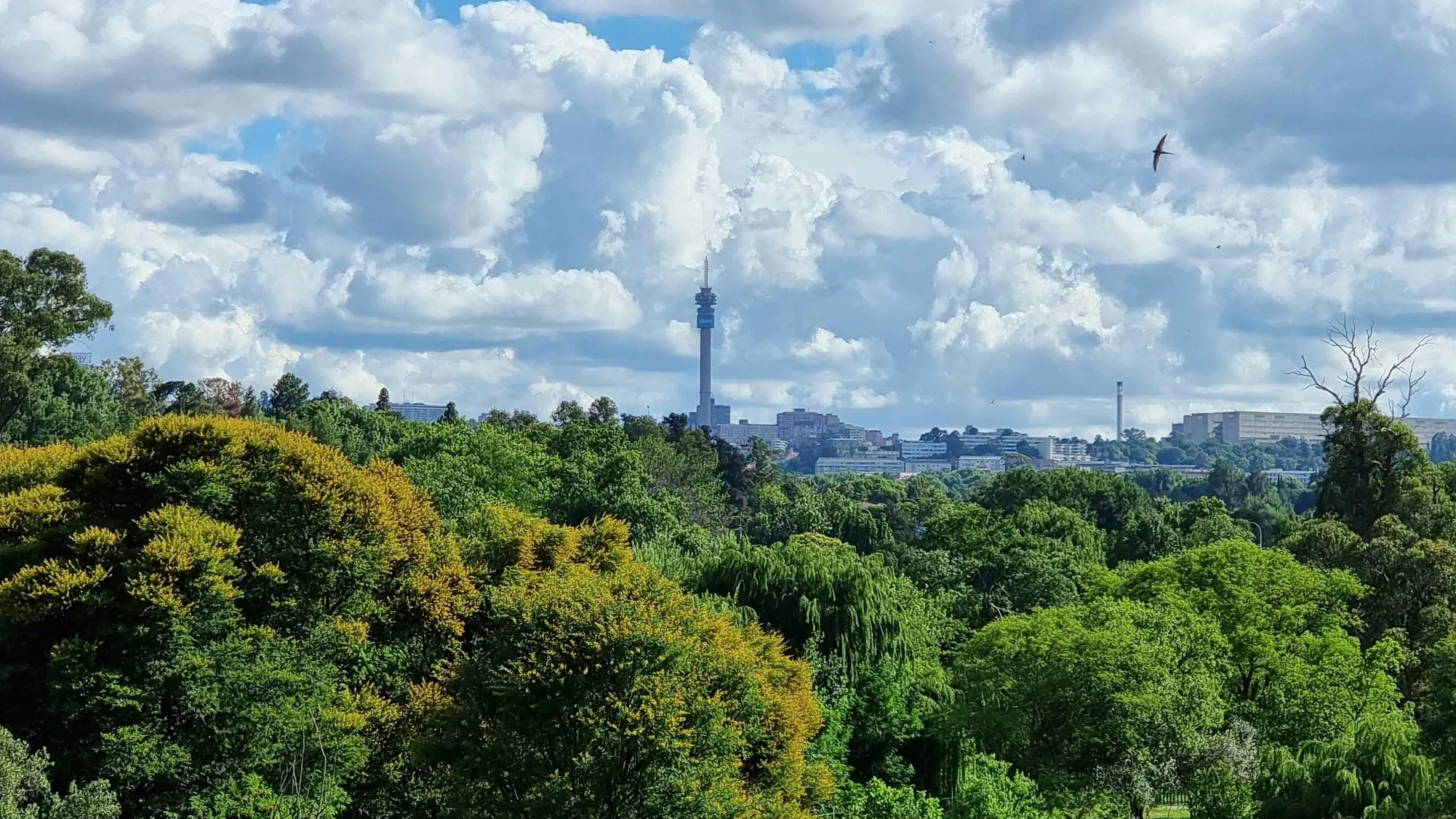
Johannesburg is not the largest man-made forest in the world. While the city maintains an extensive urban tree canopy, larger afforestation projects and more densely forested cities exist globally.
Is the Johannesburg man-made forest claim factually accurate?
The assertion that Johannesburg, a city in Gauteng Province, South Africa, hosts the largest man-made forest is a persistent civic myth. This framing gained traction through municipal communications, including a 2011 statement describing the city as the most densely treed artificial forest on earth. However, dedicated fact-checks have concluded the claim is unsupported by evidence.
Officials from Johannesburg City Parks have conceded that even under a loose definition of an urban forest, the city is merely one of the largest in the world. The primary issue is definitional. A forest, according to the Oxford English Dictionary, is an area covered chiefly with trees. Satellite imagery of Johannesburg shows that while it is treed, roads, buildings and open spaces remain the dominant features.
What do remote sensing and tree census data reveal?
The widely circulated figure of 10 million trees originates from municipal estimates following city amalgamation. Alan Buff of City Parks suggests there are approximately 1.2 million trees on pavements and in parks, with a further 4.8 million in private gardens, making up the city's green infrastructure. These numbers have not appeared in any published, peer-reviewed inventory.
Research using SPOT-6 satellite imagery provides a clearer picture of the actual canopy cover. Newete et al. (2022) found that trees cover 16.1 per cent of the city's total land area. While substantial, this is lower than other major urban areas. For comparison, Portland in Oregon has 65 per cent canopy cover, and Dallas sits at 50 per cent.
Quantifying the urban tree canopy
The species composition of the city is highly concentrated. Two exotic species, Jacaranda mimosifolia and Platanus acerifolia (London plane), account for 38 per cent of the mapped tree canopy. This concentration is a result of late nineteenth-century planting intended to suppress mining dust and provide timber props.
For a practical look at how these principles are applied at ground level, FTFA's resources on Urban Forestry provide detailed operational guidance.
When measured against the 3+30+300 rule, which requires 30 per cent neighbourhood canopy, most global cities struggle. Only Singapore has satisfied this threshold for the majority of its buildings in recent studies. Johannesburg's urban forestry achievements are notable, but they do not place the city at the top of a global league table that does not officially exist.
How does Johannesburg compare to global rival forests?
When assessing man-made forests, Johannesburg is often compared to contiguous reforestation projects rather than other cities. In these comparisons, the city loses on area but remains competitive on reported tree counts.
| Site | Type | Reported Area | Reported Tree Count |
|---|---|---|---|
China Three-North Shelterbelt | National afforestation belt | 30.143 million ha | 56 billion trees (estimated) |
Tijuca Forest (Rio de Janeiro) | Urban rainforest | 40 km² | >100,000 trees |
Nebraska National Forest | Hand-planted forest | 36,000 ha (est) | Data unverified |
Johannesburg | Urban canopy | 1,645 km² (city) | 10 million (unverified) |
China’s Three-North Shelterbelt Programme is the world's largest afforestation project. It is more than 50 times the size of the greater Johannesburg metropolitan area. Similarly, the Tijuca Forest in Rio de Janeiro is a contiguous forest in the strict sense, whereas Johannesburg's trees are dispersed across a South Africa grassland biome.
Why is the urban tree canopy unequally distributed?
A city-wide average of 16.1 per cent canopy cover masks significant spatial inequality. Peer-reviewed research confirms that green infrastructure in South Africa remains distributed according to apartheid-era planning.
High-income northern suburbs like Bryanston and Houghton have a 24.2 per cent canopy cover. In contrast, former black townships in the south, such as Soweto, have only 6.7 per cent cover. Urban greenness indices show an 83 per cent rating for affluent Rosebank versus 14 per cent for Soweto. This "green apartheid" means most residents do not live under the vast canopy described by municipal slogans.
Greening initiatives and survival rates
Remediation programmes have attempted to bridge this divide. The Greening Soweto project planted 200,000 trees for the 2010 FIFA World Cup. However, a 2018 audit found that only 43 per cent of these trees survived. Surviving trees were concentrated in only thirteen species, creating a monoculture risk.
Current municipal efforts focus on indigenous species like Celtis africana (White Stinkwood) to improve biodiversity net gain. These trees are planted symmetrically in northern and southern corridors to address the historical green divide. Increasing the survival of street trees in township areas remains a critical challenge for the city's green infrastructure policy.
What biological threats currently face the city forest?
The Johannesburg canopy is currently a depreciating asset due to biotic threats. The polyphagous shot hole borer (PSHB), identified in 2017, is the most significant danger to the city's trees. The beetle attacks 162 tree species in South Africa, including 78 indigenous varieties.
The impact of polyphagous shot hole borer
The high concentration of London plane trees makes the northern suburbs especially vulnerable. In nature, a single species should represent less than 10 per cent of a street-tree population to prevent outbreaks. Johannesburg's canopy exceeds this safety limit, facilitating the rapid spread of the beetle.
Recent studies indicate that PSHB infestation is accelerating annually. The Johannesburg Urban Forest Alliance estimated that the city could lose 30 per cent of its canopy if the infestation remains uncontrolled. Native species, including the coral tree and various acacias, are also being colonised. Diversification is the only defensible lever to protect the canopy for the next decade. To explore how diverse species selection builds resilience against invasive beetles, see FTFA's resources on Biodiversity.
Written By
Research Team
Comprising experts from diverse departments, the Food & Trees for Africa (FTFA) research team drives informed strategies to advance environmental sustainability, climate resilience and food security.
Found this resource useful?
Help us continue building an open-source knowledge economy for environmental sustainability. Your support funds our ongoing research.