Architecture of Safety: Why the Right Trees Might Mean Safer Streets
A synthesis of recent urban studies reveals a significant negative correlation between urban tree canopy and crime rates. However, the data introduces a "canopy paradox": large shade trees effectively reduce violent crime by promoting social cohesion, while small, view-obstructing shrubs can inadvertently increase crime by providing concealment.
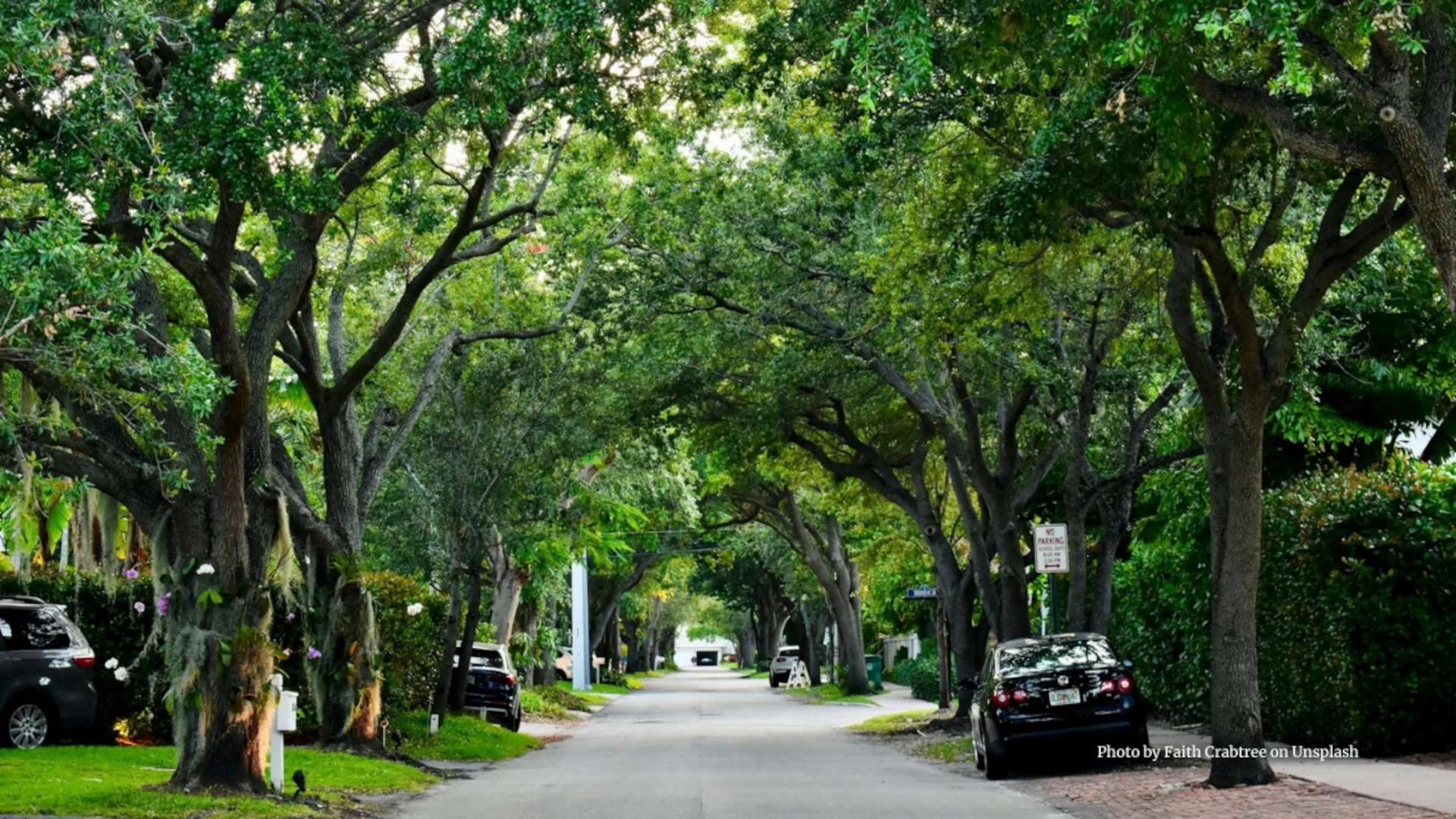
The Architecture of Safety: Why the Right Trees Might Mean Safer Streets
Ask most people how to make a street safer and they will suggest brighter lights, a camera on the corner or another patrol vehicle. Few would suggest a tree. Yet a growing body of international research points in exactly that direction, with an important twist: it is not how many trees you plant that matters most, but what kind.
Urban trees have long been valued as nature-based solutions for cleaner air, cooler streets and carbon storage. A synthesis of ten peer-reviewed studies, drawn largely from American cities such as Washington D.C., Portland, Chicago, Austin and New York, adds public safety to that list. Across most of the studies, neighbourhoods with more tree canopy recorded less violent and property crime.
But the same research contains a warning for anyone measuring success by sapling counts. Large, high-canopy trees are consistently linked to lower crime in urban landscapes. Small trees and dense, view-blocking vegetation can be linked to more of it.
What the numbers say
In Washington D.C., researchers comparing census block groups found that areas with tree canopy one standard deviation above the city average had roughly 9.3% fewer violent crimes and 8.5% fewer property crimes. In Austin, higher canopy cover was associated with lower street crime.
Portland offers some of the most interesting evidence. A 2018 study tracking newly planted street trees over time found that new plantings were followed by reductions in violent crime. Because it followed change over time rather than taking a single snapshot, it sits a step closer to cause and effect than most of the literature.
Taken together, the predominant finding is a negative association between tree cover and crime. "Association" is the operative word. Most of these studies are observational, and wealthier, better-resourced neighbourhoods tend to have both more green infrastructure and less crime. Researchers attempt to control for this, but it remains the field's biggest open question (one we explore in a companion Dialogue piece on South African cities).
Why greenery might help
Criminologists and environmental psychologists propose three main mechanisms.
1. More eyes on the street A broad indigenous shade tree such as a Karee or Wild Plum makes outdoor space more inviting. When people spend more time on their stoeps, in parks or walking along the pavement, there is more natural surveillance. Shared green spaces are also linked to stronger ties between neighbours, and neighbours who know one another are more likely to notice and report trouble.
2. Signals of care Well-kept trees tell passers-by that an area is looked after and watched. The reverse also holds: dying trees, broken tree guards and neglected verges can signal disorder, the "broken windows" effect that may embolden offenders.
3. Rest for tired minds The only mechanism directly tested as a mediator comes from studies in Chicago public housing. Residents of buildings with more surrounding vegetation reported lower levels of aggression and violence, and the effect ran partly through reduced mental fatigue. Noise, concrete and constant stimulation wear down attention and impulse control. Contact with nature appears to help restore both.
The canopy paradox
If trees are linked to lower crime, should cities simply plant as much greenery as possible? The evidence says no. What matters is the size and visibility of the vegetation.
Large trees with high crowns keep sightlines open at eye level while drawing people outdoors. Small trees and dense shrubs do the opposite: they block views and offer cover to anyone who does not want to be seen.
An earlier Portland study made this vivid. Larger street-tree crowns were associated with less crime, while a higher number of small yard trees was associated with more. The researchers estimated a "break-even" point: a tree's crown needed to reach about 128 square metres before its association with crime turned from positive to negative. In New York City, overall canopy cover was linked to less severe crime, but a high share of small trees was linked to more.
The design lesson is straightforward: plant for canopy and keep sightlines clear.
Who benefits most?
The equity picture is mixed. In Washington D.C., the protective association of existing canopy was weaker in high-poverty areas and places with low homeownership. Researchers suggest that where social infrastructure has been eroded by long-term disinvestment, green space is harder to turn into the cohesion and shared guardianship that deter crime.
The Portland study of new plantings found the opposite pattern: reductions in crime after planting were especially pronounced in lower-income neighbourhoods. One reading is that established canopies largely reflect historical advantage, while new trees in under-served areas may be where the marginal gains are greatest. Both findings come from single cities, so neither should be treated as the final word.
Beyond the tree count
For municipalities, funders and organisations like Food & Trees for Africa, the message is that the number of trees planted is a poor measure of impact on its own. A thousand small trees crowded into the wrong spaces may tick a sustainability box while reducing visibility on the street.
Better outcomes stem from deliberate canopy design: choosing species that will grow tall and broad, siting them to keep pavements visible and committing to the years of watering and maintenance it takes for a sapling to become a shade tree. A neglected tree sends the wrong signal.
Trees are not a substitute for jobs, lighting or policing. But the evidence suggests they belong in the conversation about safer streets, alongside their better-known roles in cooling and cleaning our cities. Planted well and cared for, they help build places where people want to spend time outside, and that may be one of the quieter foundations of safety.
References
- Wo JC, Rogers EM (2024) Urban greenspace and neighbourhood crime. Criminology.
- Donovan GH, Prestemon JP (2012) The effect of trees on crime in Portland, Oregon. Environment and Behaviour, 44(1).
- Burley BA (2018) Green infrastructure and violence: Do new street trees mitigate violent crime? Health & Place, 54.
- Lin J, Wang Q, Huang B (2021) Street trees and crime: What characteristics of trees and streetscapes matter. Urban Forestry & Urban Greening, 65.
- Kuo FE, Sullivan WC (2001) Environment and crime in the inner city: Does vegetation reduce crime? Environment and Behaviour, 33(3).
- Kuo FE, Sullivan WC (2001) Aggression and violence in the inner city: Effects of environment via mental fatigue. Environment and Behaviour, 33(4).
- Kuo FE (2003) The role of arboriculture in a healthy social ecology. Journal of Arboriculture, 29(3).
- Shepley M, Sachs N, Sadatsafavi H, Fournier C, Peditto K (2019) The impact of green space on violent crime in urban environments: An evidence synthesis. International Journal of Environmental Research and Public Health, 16(24).
- Lee S (2021) Does tree canopy moderate the association between neighbourhood walkability and street crime? Urban Forestry & Urban Greening, 65.

Written By
Research Team
Comprising experts from diverse departments, the Food & Trees for Africa (FTFA) research team drives informed strategies to advance environmental sustainability, climate resilience and food security.
Support Independent Analysis
Did you find this insight valuable? Your support allows us to continue producing rigorous, open-access research for ESG and sustainability professionals worldwide.
Make a ContributionFact Sheet
- Est. Reading Time6 min
- Author Auth.Verified
- Last ReviewedOctober 29, 2026
Research & Trends
Get early access to our latest insights and analysis.
Join our community of ESG and sustainability professionals. We respect your inbox and you can unsubscribe at any time.
Recommended For You
Social Impact and Communities
How the Maize Monoculture Trap Broke Southern African Nutrition
Sustainable Food Production
Biological Inflation: Why Food Security Without Nutrition Is a Mirage
Social Impact and Communities
The Illusion of Abundance: Unmasking South Africa’s Hidden Hunger
Agri-enterprise
Beyond Title Deeds: Cultivating Successful Emerging Farmers

Regulation, Risk and Governance