
What is Agroecology? A Simple Guide to Farming with Nature

Key Takeaways
- Agroecology integrates science, farming practices and social movements to build resilient food systems.
- Diversified systems increase biodiversity by 24% and pest control by 63% on average.
- Small-scale bio-intensive vegetable gardens can generate five times more revenue per acre than conventional farms.
- Organic vegetables contain 14.2% higher zinc concentrations and higher levels of essential vitamins.
- Smallholder farmers in Africa see average yield increases of 2.13-fold through agroecological intensification.
Agroecology is a holistic approach to food production that integrates ecological science, sustainable farming practices and social justice movements to create resilient food systems. This paradigm shift replaces synthetic chemical inputs with biological processes, thereby improving soil health, enhancing biodiversity and securing smallholder livelihoods.
What is agroecology and how does it function?
At its core, agroecology applies ecological principles such as diversity, synergy, recycling and biological regulation to the design and management of food systems. It stands in deliberate contrast to industrial agriculture's reliance on monoculture and chemical interventions. Furthermore, research confirms that this methodology is not merely an alternative but a robust and defensible foundation for 21st-century global food systems.
A major synthesis of 95 meta-analyses spanning 5,156 experiments revealed that diversified systems deliver median increases of 14% in crop production, 24% in associated biodiversity and 51% in water quality (Beillouin et al., 2021). Furthermore, biological pest and disease control improved by 63% under these management frameworks. A subsequent second-order meta-analysis of 98 studies concluded that diversification enhances pollination, nutrient cycling and soil fertility without compromising agricultural yields (Tamburini et al., 2020).
This functionality rests on ecological complementarity. When multiple species occupy the same space, they utilise resources differently and often support one another. For example, taller plants provide shade for groundcovers, while deep-rooted species bring nutrients to the surface for shallow-rooted neighbours. This synergistic interaction, demonstrated across climate-smart farms, food gardens and food forests, allows polycultures to achieve *transgressive overyielding*, a phenomenon where the total output exceeds what even the best-performing single crop could produce in isolation.
What are the core principles of agroecological systems?
The transition to agroecology manifests in three primary ways: as a science, a set of practices and a social movement. The High Level Panel of Experts (HLPE) has consolidated 13 principles to guide this transition, including recycling, input reduction, soil health, animal health and biodiversity. These are complemented by the UN Food and Agriculture Organisation’s (FAO) 10 elements of agroecology, which emphasise human and social values, circular economies and the co-creation of knowledge.
The movement's social dimension centres on food sovereignty: the right of people to define their own food and agricultural systems. This ensures that farmers retain control over their land, seeds and markets. Historically, these principles were the norm. Indigenous and peasant farming systems, such as the *milpa* polycultures of Mesoamerica or the intercropped homestead gardens of South Africa, embodied these concepts for millennia before they were formally categorised as a science.
Several global case studies demonstrate these principles functioning at scale:
Cuba: Following the 1991 Soviet collapse, the country pivoted to urban *organopónicos* (raised beds) and biological pest control. By 1996, Havana produced 8,500 tonnes of fresh produce, rendering the city roughly 90% self-sufficient in fruits and vegetables.
The Sahel: In West Africa, Farmer-Managed Natural Regeneration (FMNR) has successfully revegetated over 3 million hectares in Niger. Farmers protect and prune shoots from the underground roots of native trees to create productive agroforestry parklands.
India: The Andhra Pradesh Community Managed Natural Farming (APCNF) programme targets 6 million farmers. Trials have demonstrated 30-40% higher groundnut yields under agroecological management compared to conventional chemical baselines.
How does the push-pull system manage pests naturally?
The 'push-pull' system is a canonical innovation in pest management within African smallholder agriculture. Developed by researchers at the International Centre of Insect Physiology and Ecology (ICIPE), it leverages the chemical ecology of plants to protect grain crops without synthetic sprays.
In this system, maize is intercropped with desmodium, a legume that acts as the "push". Desmodium releases volatile chemicals that actively repel stemborer moths. Simultaneously, its root exudates trigger the suicidal germination of *Striga* weed seeds, effectively clearing the soil of parasitic plants. Around the field's perimeter, farmers plant Napier grass or Sudan grass as the "pull". This trap crop is highly attractive to moths for egg-laying, yet its structure prevents the larvae from surviving.
The benefits of the push-pull system extend far beyond pest control. Desmodium fixes atmospheric nitrogen to improve soil fertility and provides high-protein fodder for livestock. This diversification facilitates increased milk production and introduces new income streams for farming families. To date, approximately 125,000 smallholder farmers in eastern Africa have adopted this system, proving that ecological solutions can scale effectively across diverse rural landscapes.
What makes bio-intensive market gardening economically viable?
While industrial agriculture focuses on raw volume, agroecology optimises for value and efficiency per unit of land. The bio-intensive market garden model demonstrates that small operations, often ranging between half an acre and five acres, can be highly profitable.
For instance, Singing Frogs Farm in California generates approximately $95,000 to $100,000 (R1.8 Million) in revenue per crop acre (0.4 ha) annually. This figure is five to seven times higher than the regional average for small conventional farms. They achieve this exceptional yield through five to seven sequential crops per bed each year, whereas conventional farms typically manage only one or two. Other agricultural pioneers, such as Jean-Martin Fortier and Curtis Stone, utilise similar methods to generate six-figure incomes on minimal acreage.
Five key factors drive this economic performance:
- Crop turnover: High-rotation planting compounds revenue throughout the growing season.
- Direct marketing: Selling via Community Supported Agriculture (CSA) programmes or farmers' markets allows farmers to capture retail prices rather than wholesale rates.
- Low capital costs: These operations avoid the expense of tractors and heavy machinery, relying instead on efficient hand tools like broadforks.
- Low input costs: Farmers minimise expenses by utilising on-farm composting systems and saved seeds instead of purchasing synthetic chemicals.
- Premium pricing: Consumers are willing to pay a premium for fresh, nutrient-dense and organically grown produce.
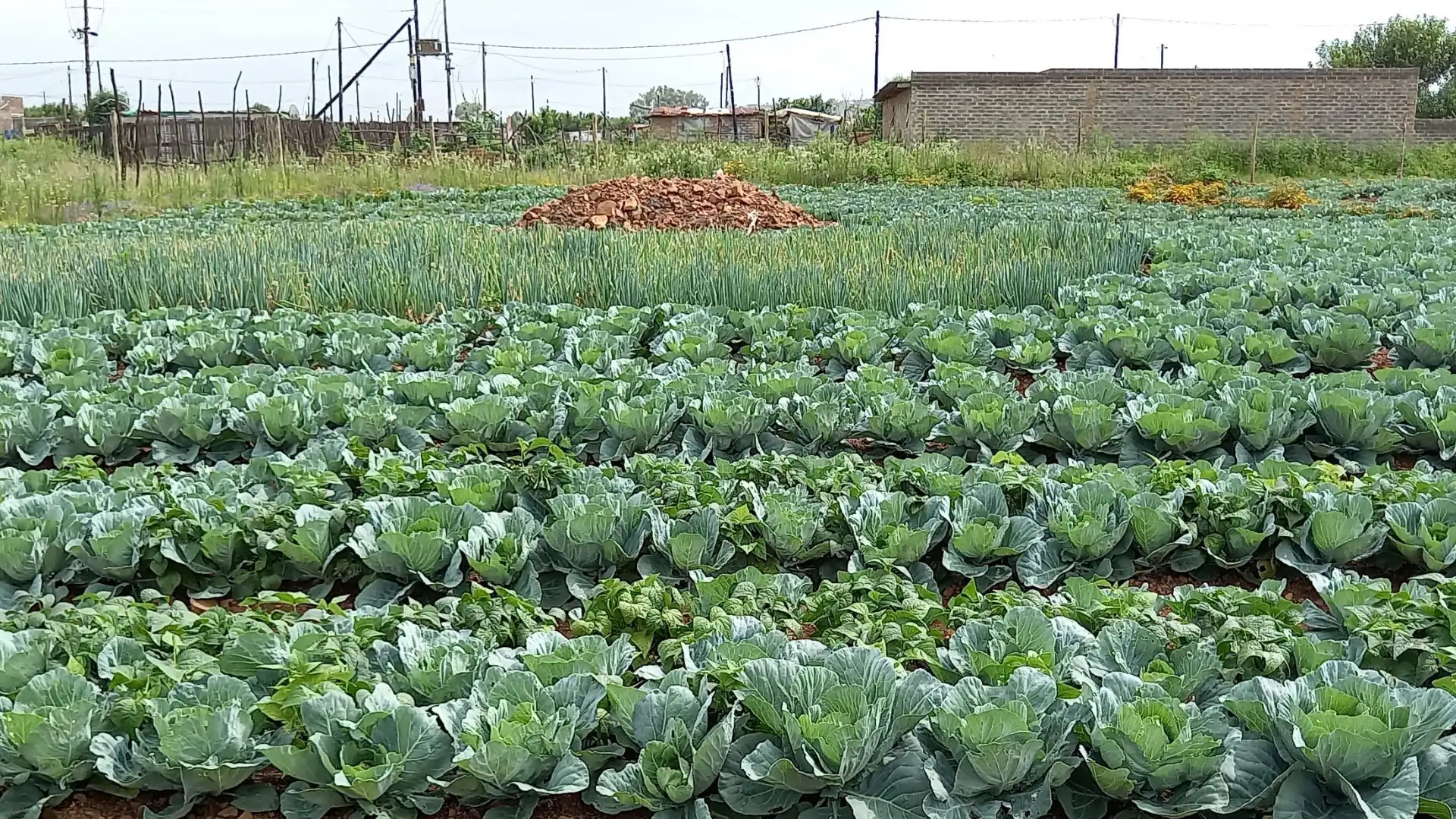
For smallholders in South Africa, this model is particularly attractive. It requires minimal startup capital and can be successfully initiated on small urban plots or schoolyards, as beautifully demonstrated by Agrolimo Farms in Soweto.
How does agroecology improve soil health and nutrition?
The foundational mechanism of agroecology is the restoration of the soil microbiome. Healthy soil operates much like a sourdough starter: it is a living biological community that requires consistent feeding and optimal conditions to thrive and is foundational to any climate-smart agriculture.
Practices such as reduced tillage and heavy mulching serve to protect and nurture soil life. For example, Singing Frogs Farm successfully increased its soil organic matter from 2.4% to 6.6% in under 20 years. This dramatic increase significantly improves water retention and nutrient availability. Research consistently indicates a strong correlation between soil quality and the nutrient density of the resulting crops. Conversely, industrial farming heavily relies on synthetic N-P-K (nitrogen, phosphorus and potassium) fertilisers, which provide bulk minerals but frequently result in vegetables with diminished micronutrient profiles.
Recent meta-analyses demonstrate that organic vegetables contain 14.2% higher zinc concentrations than their conventional counterparts (Hou et al., 2025). Other agricultural trials have found significantly elevated concentrations of phenolics, carotenoids and vitamins in organic cabbage, lettuce and potatoes. Furthermore, organic crops typically exhibit lower levels of toxic heavy metals, such as cadmium and nickel.
In sub-Saharan Africa, the cultivation of African Indigenous Vegetables presents a major nutritional asset. These resilient plants are naturally adapted to local climates and offer a diverse array of bioactive phytochemicals that substantially improve family health. For a practical look at how these principles are applied at ground level, FTFA's resources on Community Food Gardens provide detailed operational guidance.
What is the status of agroecology in South Africa?
South Africa's food system remains deeply unequal. Approximately 34% of households in Johannesburg currently face food security challenges, with many forced to spend very little on fresh, nutritious produce. While industrial monocultures continue to dominate the agricultural landscape, a rapidly growing movement of dedicated practitioners is actively challenging this status quo.
Organisations like Abalimi Bezekhaya in Cape Town have been supporting township farmers since 1982. Operating within the sandy soils of the Cape Flats, they teach bio-intensive methods to build crucial soil organic matter and successfully connect farmers to commercial markets through the Harvest of Hope CSA. In KwaZulu-Natal, the Siyazisiza Trust works closely with rural smallholders to reintroduce resilient, drought-tolerant traditional crops, such as sorghum and millet, while simultaneously implementing effective rainwater harvesting techniques.
On a national level, Biowatch South Africa leads critical policy advocacy and collaborates with homestead farmers to establish robust, farmer-led seed systems. This vital work ensures that farmers can save and exchange open-pollinated plant varieties, significantly reducing their financial dependence on patented hybrid seeds. Despite these grassroots successes, the 2016 IPES-Food report highlights that dominant industrial systems continue to generate severe negative externalities, including widespread land degradation and high greenhouse gas emissions (IPES-Food, 2016).
The national policy landscape remains unfortunately contradictory. While dormant draft strategies for agroecology exist, their implementation is frequently hampered by inadequate budget allocations and the entrenched dominance of large agribusiness interests. Nevertheless, the undeniable success of localised initiatives proves that agroecological transitions provide a highly viable, sustainable path for climate adaptation and resilient livelihood generation across both rural and urban contexts. To further understand how these holistic systems build long-term carbon reserves, explore FTFA's resources on Carbon Sequestration.
Written By
Research Team
Comprising experts from diverse departments, the Food & Trees for Africa (FTFA) research team drives informed strategies to advance environmental sustainability, climate resilience and food security.
Found this resource useful?
Help us continue building an open-source knowledge economy for environmental sustainability. Your support funds our ongoing research.