
How Do I Make a Compost?
Key Takeaways
- Maintaining a 30 to 1 carbon to nitrogen ratio accelerates the decomposition process significantly.
- Heaps require a minimum volume of 1 cubic metre to generate sufficient thermophilic heat.
- Aerobic decomposition depends on moisture levels remaining between 40 and 60%.
- Regular turning introduces oxygen and prevents the heap from becoming an anaerobic site.
- Finished compost reduces the need for synthetic fertilisers by restoring natural nutrient cycles.
Composting Systems transform organic waste into nutrient-dense matter through controlled aerobic decomposition. Building a compost heap requires a balance of carbon and nitrogen to accelerate soil health and reduce landfill contributions.
Suitable for: All skill levels
Time to Yield/Result: 3–6 months
How does composting support the soil ecosystem?
Composting is the biological management of the nitrogen cycle and the carbon cycle to produce stable organic compost. This process relies on a diverse community of bacteria, fungi and other organisms that consume organic matter and excrete plant-available nutrients.
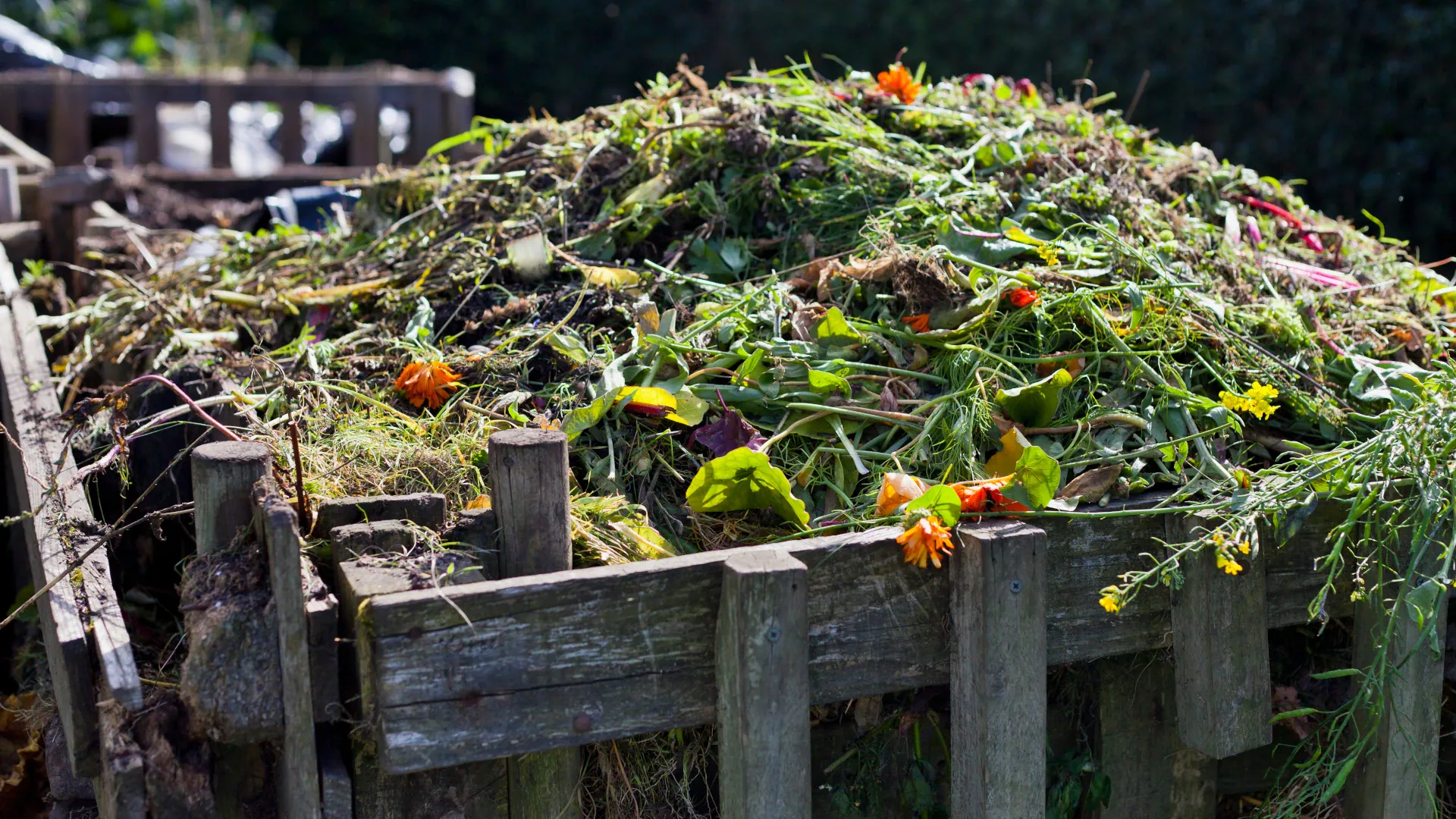
A compost heap requires the correct ratio of materials and moisture to sustain the microbial life that does the heavy lifting. If you neglect the compost heap, the microbial population crashes and decomposition stalls.
The efficiency of this system is measured by the carbon to nitrogen (C:N) ratio. Research by the FAO (2022) indicates that a C:N ratio of 30:1 is optimal for rapid decomposition. If the ratio is too high in carbon, the process slows down because the microbes lack the protein needed to build their bodies. If the ratio is too high in nitrogen, the excess is released as ammonia gas, creating unpleasant odours and losing valuable nutrients to the atmosphere. When managed correctly, the heap reaches temperatures between 55 and 65 degrees Celsius. This temperature range is vital because it neutralises most pathogens and weed seeds, ensuring the final product is safe for use in sustainable agriculture projects.
Beyond the immediate addition of nitrogen, phosphorus and potassium, finished compost provides a massive boost to soil life. It introduces beneficial microbes and creates a porous soil structure that holds water and air. In South African soils, which are often depleted of organic matter, the addition of healthy compost increases the water-holding capacity of the soil. For every 1% increase in organic matter, the soil can hold an additional 180,000 litres of water per hectare. This increase in water storage capacity creates the resilience that is a core pillar of agroecology, allowing food systems to survive prolonged dry spells without excessive irrigation.
What preparation is required for a successful compost heap?
Preparation begins with selecting the most suitable space and sourcing balanced materials.
Choose a level, well-drained area that receives partial shade. In the intense South African sun, a heap in full exposure will dry out too quickly, requiring constant irrigation to remain active. Conversely, a heap in total shade may stay too cool in winter, slowing the metabolic rate of the bacteria.
Spatial planning is critical. You must ensure there is enough room to turn the pile and a secondary space to store the finished product as it cures.
Collect your materials in two distinct categories. Greens are nitrogen-rich materials such as fresh grass clippings, vegetable scraps and green leaves. These provide the fuel for microbial growth. Browns are carbon-rich materials like dry leaves, straw, shredded cardboard and woody prunings. These provide the energy and the structural integrity that allows air to penetrate the pile.
As of 2026, many municipal bylaws in South Africa encourage domestic composting to reduce the burden on landfills, but always check current local guidance regarding the management of potential pests or odours in suburban areas.
Gather the necessary tools to ensure efficient handling. A garden fork is the primary instrument for turning the pile and checking the internal texture. You will also need a spade for clearing the site and a watering can or hose with a fine spray attachment.
If you are working at a larger scale, consider using a compost thermometer to monitor the internal temperature, which provides the most accurate data on the health of your microbial colonies.
For a practical look at how these principles are applied at ground level, FTFA's resources on Soil Health provide detailed operational guidance on material sourcing.
How do you build and maintain a compost heap?
Building a compost heap follows a specific layering logic often referred to as the lasagna method.
Start by laying a 150 millimetre base of coarse brown materials such as small branches or woody stalks directly on the bare earth. This initial layer is the most important for aeration because it creates a chimney effect, allowing oxygen to enter the bottom of the pile and rise through the materials. Avoid placing your heap on a concrete or paved surface, as this prevents earthworms and native soil microbes from migrating into the pile to assist with the decomposition process.
Once the base is set, add a 100 millimetre layer of green nitrogen-rich materials. These scraps should be chopped into small pieces, ideally no larger than 50 millimetres, to increase the surface area for bacteria to attack. Follow this with a 100 millimetre layer of brown carbon-rich materials.
Lightly water each layer as you go. The materials should feel like a wrung-out sponge: damp to the touch but not dripping.
Repeat this alternating pattern of greens and browns until the heap reaches a height of at least 1 metre. A heap smaller than this lacks the thermal mass required to maintain high internal temperatures.
To further accelerate the composting process, you can add a starter layer of existing compost or a few scoops of healthy topsoil between the main layers. This acts as an inoculant, introducing billions of active microbes into the new pile immediately.
Once the heap is complete, cover it with a final layer of straw or a piece of breathable burlap or other natural fibre. This cover retains heat and moisture while still allowing the pile to breathe. Over the next few days, the internal temperature should rise significantly. You can test this by pushing a garden fork into the centre of the pile for a few minutes; if the forks are uncomfortably hot to the touch when removed, the thermophilic bacteria are active.
Maintenance involves monitoring the oxygen and moisture levels. A compost heap is a living system that requires air.
Every two to three weeks, use a garden fork to turn the pile, moving the materials from the outside toward the centre and the materials from the bottom toward the top. This redistribution of matter ensures that everything decomposes evenly and that the aerobic bacteria do not suffocate.
If the pile smells like rotten eggs, it has become anaerobic and needs immediate turning to introduce oxygen. If the pile is dry and dusty, add water while turning it.
The process is complete when the original materials are no longer recognisable. The finished compost should be dark, crumbly and smell like fresh forest earth.
The curing phase is the final step. Once the heap stops heating up after turning, let it sit for two to four weeks. This allows the microbial populations to stabilise and ensures that all organic acids have been neutralised before you apply the compost to young or sensitive plants. Incorporating this compost back into the ground is the most effective way to improve soil health and close the nutrient loop in any garden or farm.
How do you adjust for different South African conditions?
The diverse climates of South Africa require you to adapt the management of your heap to maintain biological activity. You must adjust your approach based on the local temperature and rainfall patterns.
- Arid Regions: In the Karoo or Northern Cape, evaporation is the primary challenge. Dig a shallow pit 300 millimetres deep to house the base of your heap. This uses the surrounding earth as insulation to keep the pile moist and cool.
- High Rainfall Areas: In the KwaZulu-Natal mist belt or coastal regions, excess moisture can drown the heap. Build your pile on a slightly elevated mound and keep it covered with a waterproof tarp during heavy storms to prevent it from becoming a soggy, anaerobic mess.
- Winter on the Highveld: Cold temperatures can stall decomposition. Increase the volume of your heap to 1.5 cubic metres to improve heat retention and add more nitrogen-rich greens to provide extra energy for the bacteria.
- Coastal Sandy Soil: If you are composting to improve sandy soil, focus on using more woody browns in your mix. These take longer to break down but produce a more stable compost that is better at building soil structure.
- Small Urban Spaces: If space is limited, use a vertical composting bin or a tumbler. These systems occupy less ground area and are designed to retain heat more efficiently than a loose pile.
Adapting these techniques ensures that your composting efforts remain productive year-round regardless of your micro-climate.
For more information on using finished compost to support local food systems, explore FTFA's resources on Tree Maintenance.
Quick Reference Guide
Prerequisites Checklist:
Tools & Materials:
- Garden fork
- Spade
- 1 cubic metre of mixed organic waste (Browns and Greens)
- Water source
- Breathable cover (straw or burlap)
- Compost thermometer for technical monitoring
- Shredder or machete for breaking down woody stalks
- Waterproof tarp for high-rainfall regions
Step-by-Step Summary:
- Select a level site with partial shade and good drainage.
- Clear the ground and loosen the topsoil with a fork.
- Lay a 150 millimetre base of coarse woody materials.
- Add a 100 millimetre layer of nitrogen-rich "greens."
- Moisten the layer until it feels like a damp sponge.
- Add a 100 millimetre layer of carbon-rich "browns."
- Repeat layering until the heap is 1 metre high.
- Cover the pile with straw or burlap to retain heat.
- Monitor the internal temperature every three days.
- Turn the pile every two to three weeks to introduce air.
- Add water if the materials feel dry during turning.
- Allow the finished compost to cure for two weeks.
Written By
Research Team
Comprising experts from diverse departments, the Food & Trees for Africa (FTFA) research team drives informed strategies to advance environmental sustainability, climate resilience and food security.
Found this resource useful?
Help us continue building an open-source knowledge economy for environmental sustainability. Your support funds our ongoing research.